In recent years, increased expectations from investors, regulators, employees, and customers have put significant pressure on companies to increase their sustainability efforts.
The Sustainable Development Goals (SDGs) are not just another sustainability framework, but the only universally agreed blueprint to turn meaningful ambition into transformational change. However, businesses report difficulties in integrating the SDGs into their core strategies and in understanding, reporting, and managing their impact on the Goals.
Elsevier,
Sustainable Development of Renewable Energy: Latest Advances Production, Storage, and Integration, Advances Renewable Energy Technologies, 2024, Pages 401-412
This chapter aligns with SDGs 7 (Affordable and Clean Energy) and 17 (Partnerships for the Goals) by highlighting the roles of smart grids, renewable energy communities, information, and digitization, requiring technological, research, and political collaboration, in advancing the energy transition.
World Intellectual Property Day 2024 is highlighting the critical importance of intellectual property (IP) in catalyzing the human innovation and creativity needed for achievement of the United Nations Sustainable Development Goals (SDGs). This study provides an overview of the key debates and the recent evidence on the societal role of Intellectual property rights (IPRs).
Large language models (LLMs) are positioned to become another destination for those seeking medical information. Consequently, the readability of these materials becomes an important factor in ensuring their effectiveness in promoting health literacy, given that the average American reads at the eighth-grade level. Supports SDGs 3 and 10.

Launched in 2018, the WE Empower UN SDG Challenge is a first-of-its-kind global competition for women entrepreneurs who are advancing the UN Sustainable Development Goals.
The primary source of water utilized globally is groundwater. The task of guaranteeing the safety of drinking water is a significant worldwide issue that encompasses various environmental, social, and political aspects, including the accessibility, quantity, and quality of water. To ensure safe drinking water, real-time water quality monitoring is crucial
This article provides guidelines on assessing the role of technology-, infrastructure-induced relationships between sustainable development goals (SDGs).
UGAHacks is a 501 (c)(3) non-profit organization that has been hosting an annual 48-hour hackathon for almost a decade now. This was the 2nd time HPCC Systems sponsored a challenge and participated in the hackathon held at the University of Georgia. If you want to catch up on our participation in last year’s event, please read the blog: UGA Hacks 8, Hot Wings and Hope for the Future.
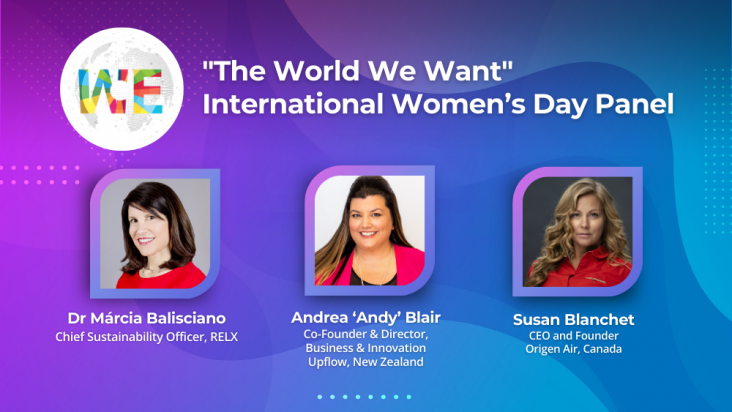
This International Women’s Day, 8 March 2024, join the United Nations in celebrating under the theme Invest in women: Accelerate progress. In this special episode of RELX's "The World We Want" series Dr Márcia Balisciano, Chief Sustainability Officer, is joined by guests Andrea "Andy" Blair, Co-Founder and President of New Zealand based geothermal research and innovation company, Upflow and Susan Blanchet, Founder and CEO of Origen Air. Both Andy and Susan are two of the 2023 awardees of the WE Empower UN SDG Challenge.
This article presents an exploratory global ‘Decarbonization Divergence’ sustainability scenario. This scenario depicts an economy that decarbonizes through technological development despite further growth, while households do not contribute to such decarbonization efforts through lifestyle change, leading to divergent developments between the economy and households.