Global

This article provides a comprehensive review of the use of graphene-based biosensing platforms for the early detection of Alzheimer's disease. It is found that graphene-based biosensors can detect Alzheimer's disease biomarkers at femtomolar concentrations, enabling early diagnosis before symptom onset. These sensors can also identify multiple biomarkers simultaneously in accessible biofluids like blood, saliva, and urine, enabling less invasive testing.
Image of podcast host and guest against a blue background with World We Want podcast logo
In this episode of the “World We Want” podcast, Márcia Balisciano interviews Professor Jurgita Malinauskaite, Professor of law and Head of Brunel Law School at Brunel University of London. They discuss the role of law, research, and collaboration in driving sustainability, from fair competition and energy transitions to circular economy solutions, all in alignment with the UN Sustainable Development Goals.

This study measured testosterone and pre-androgens in blood, finding changes with age but not with menopause. This indicates that menopause itself is not a reason for women to need testosterone supplementation.

Elsevier,

The Lancet Regional Health - Southeast Asia, Volume 41, October 2025

This viewpoint offers insights on policy to improve diet quality, that resonate not only in Bangladesh but also across other countries navigating similar transitions.

Celebrated annually on October 16, World Food Day is a key global event focused on raising awareness about food security and hunger. Established by the United Nations Food and Agriculture Organization (FAO) in 1979, this day highlights the ongoing challenges of hunger, malnutrition, and the need for sustainable food systems.

With an estimated 2 billion people worldwide suffering from iron deficiency — a condition linked to anemia, impaired childhood brain development, and higher infant mortality — researchers are racing to find more effective nutritional interventions. MIT scientists have developed a promising solution: tiny crystalline particles known as metal-organic frameworks (MOFs) that can be used to fortify everyday foods and beverages, mixed into foods such as bread or sprinkled directly into drinks like coffee or tea.
Elsevier,

The Lancet Obstetrics, Gynaecology, & Women's Health, Volume 1, Issue 2, October 2025, Pages e122-e131

This is the largest cohort study to date of women with hyperemesis gravidarum, and it is the first to explore a wide array of neuropsychiatric and mental health outcomes, including psychotic disorder. Evidence study suggests that while hyperemesis gravidarum increases the risk of poor mental health compared to unaffected pregnancies, the link between its severity and psychiatric burden is complex. The lower depression risk in cases with metabolic disturbance versus mild disease may reflect varying levels of healthcare support.
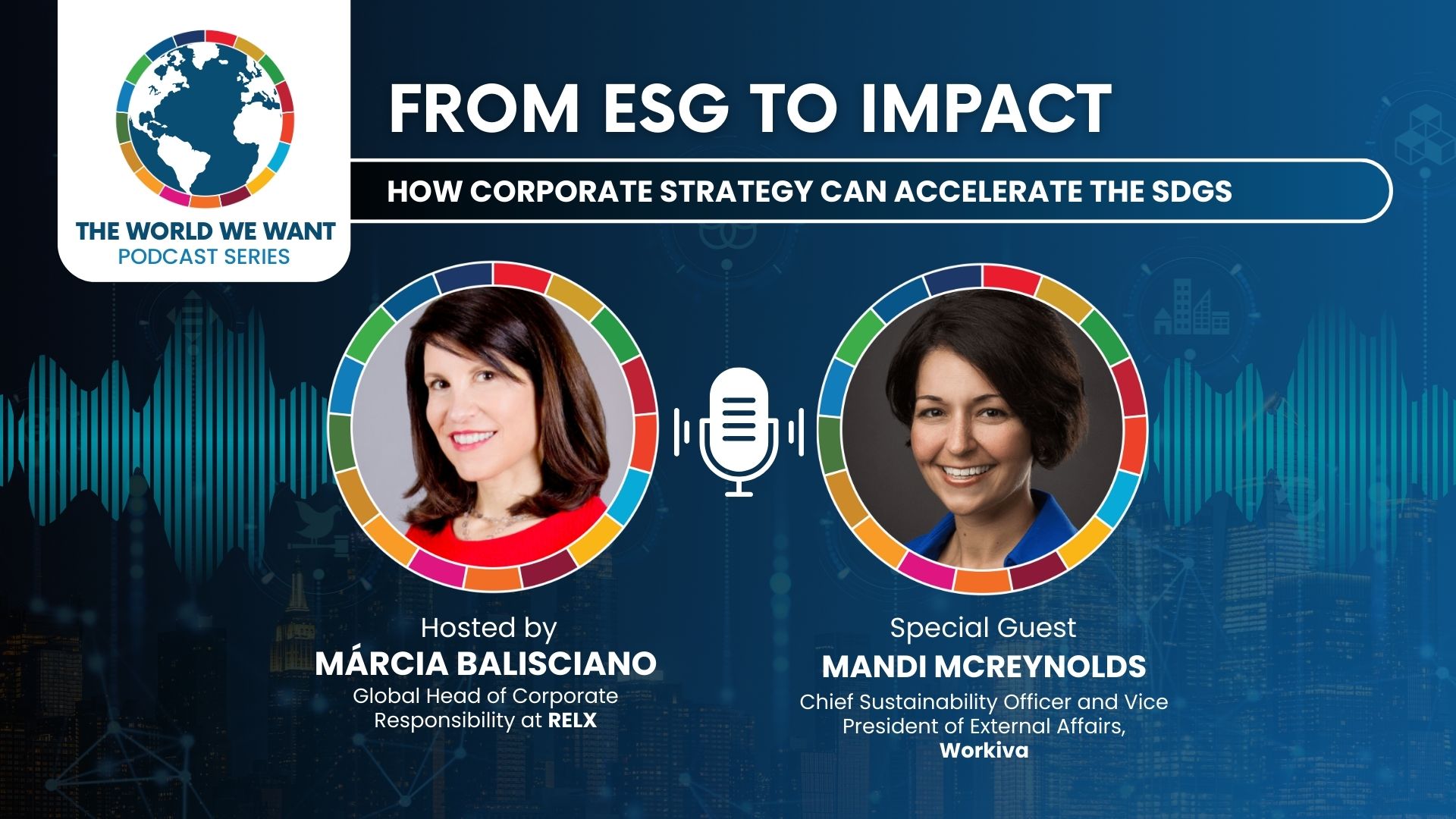
Image of the pocast host and guest against a blue background with the World We Want logo in the corner
In this episode of the "World We Want" podcast, Márcia Balisciano interviews Mandi McReynolds, Chief Sustainability Officer and Vice President of External Affairs and Customer Advocacy at Workiva. They discuss corporate responsibility, environmental, social, and governance (ESG) initiatives, and the alignment of these strategies with the UN Sustainable Development Goals (SDGs).
Glycation is recognized for its ability to stiffen collagen matrices through non-enzymatic crosslinking. However, the biological effects of glycation in vivo, particularly in diabetic hyperglycemia remain less understood. Clinical observations suggest that diabetes contributes to pathogenic tumor vasculature, yet the underlying mechanisms are not clear.

This chapter introduces autism spectrum disorder (ASD) and intellectual developmental disabilities through applied behavior analysis (ABA), aligning with SDG 3 (Good Health and Well-being) by promoting evidence-based strategies to improve health and quality of life, and SDG 10 (Reduced Inequalities) by advocating ethical, inclusive practices that respect neurodiversity and ensure equitable support for individuals with ASD and IDD.

Pages