This report presents a structured analysis of insights from an ADSW Advisory Committee meeting held in 2026, examining the technological, economic, and policy conditions shaping the global clean energy transition. It addresses grid optimization, emerging energy technologies, trade and supply risks, the evolving role of artificial intelligence, and the re-emergence of carbon markets as a potential financing mechanism.

This report synthesizes the outcomes of a high level UK–UAE clean energy roundtable convened in June 2026. It examines barriers to scaling clean energy, the role of government signalling and co-investment, priority technology areas for collaboration, and a set of strategic action recommendations aimed at accelerating the energy transition through deeper bilateral cooperation.
The Lancet Obstetrics, Gynaecology, & Women's Health, Volume 2, Issue 2, February 2026, Pages e129-e139
This systematic review and meta-analysis of 81 included studies synthesised available data on the prevalence of postpartum haemorrhage and severe postpartum haemorrhage according to objective and subjective blood loss assessment methods and mode of birth (vaginal and caesarean). Authors report that the pooled rates of postpartum haemorrhage and severe postpartum haemorrhage were substantially higher when objective methods of blood loss assessment were used instead of subjective methods.
How Sex and Gender Impact Clinical Practice: An Evidence-Based Guide to Patient Care (Second Edition), 2026, pp 11-23
This chapter aligns with SDG 3 – Good Health and Well‑Being and SDG 5 – Gender Equality by demonstrating how gender‑informed communication strategies can improve clinician‑patient interactions, leading to better healthcare outcomes and more equitable, culturally aware treatment experiences for women and other gendered patient groups.
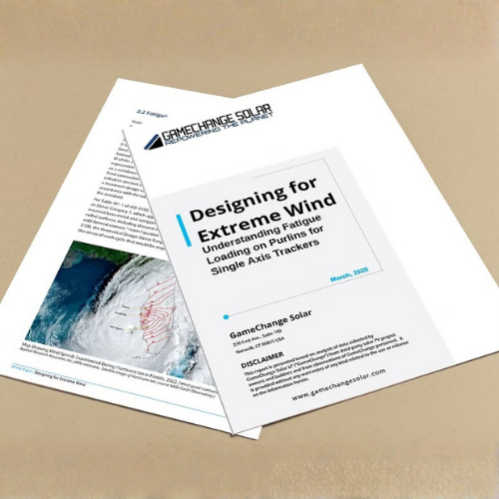
Short summary: This report explains how hurricanes and other long duration extreme wind events can generate repeated cyclic pressures on single axis tracker systems that accumulate as fatigue loading over time. It finds that commonly used standards and analytical approaches may not represent real hurricane cycle counts, pressure amplitudes, or the full module purlin assembly behavior.