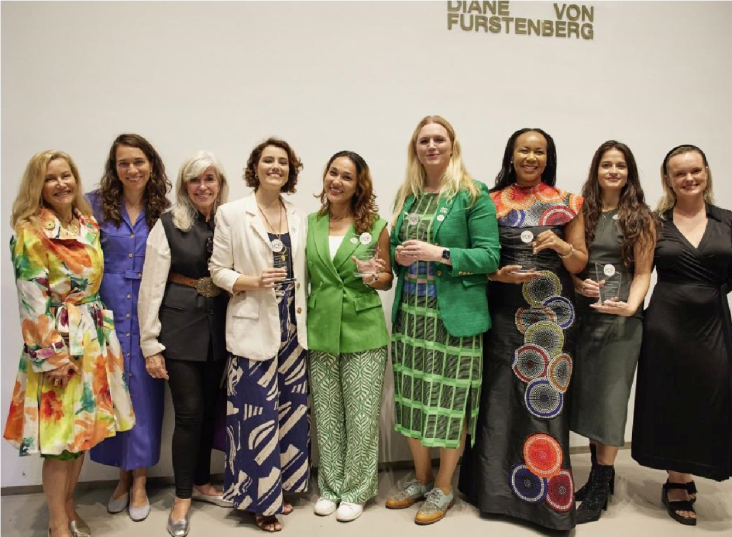
Image of the WE Empower SDG Challenge awardees standing together at the 2024 pitch night

RELX has been a Lead Partner and supporter of the WE Empower Challenge since 2023. The WE Empower UN SDG Challenge honors innovative women leaders from around the world who are pushing the United Nations Sustainable Development Goals or SDGs forward, through sustainable business practices and inspiring others to follow suit. Read about the 2024 awardees.

This mixed transdisciplinary study developed a WEF nexus-based framework to guide strategic policy decisions to catalyze progress toward achieving sustainable development goals.
The article demonstrates that while healthier diets often align with reduced environmental impacts in several domains, significant trade-offs exist, particularly regarding water use and cost. Diet quality indexes that emphasize plant-based foods offer the most consistent sustainability benefits. However, no diet pattern is without drawbacks, underscoring the importance of nuanced, multidimensional assessments and the integration of nutrition and sustainability data to inform effective policy and clear public guidance.
This study shows that climate change has significantly decreased crop yields and heightened food insecurity in sub-Saharan Africa, and although adaptation strategies provide some relief, major challenges persist, highlighting the need for targeted resilience policies.
Elsevier,

Aquatic Biomes: Global Biome Conservation and Global Warming Impacts on Ecology and Biodiversity, Volume , 1 January 2025

This chapter describes the development of a unified water information system designed to improve the management and preservation of hydrological resources in the Jamapa River Basin, supporting SDG 6 by strengthening data-driven water resource management. It also aligns with SDG 17 by highlighting collaboration and information exchange among multiple stakeholders to support sustainable water governance.
This study projects China's agricultural environmental impacts under different socioeconomic pathways, showing that sustainable development (SSP1) could reduce impacts by up to 76% by 2050, while less cooperative scenarios (SSP3) may lead to smaller reductions or increases. The results highlight the critical influence of agricultural policies in driving environmental sustainability and decarbonization across China's regions.
This Viewpoint issues a multidisciplinary call to embed sustainability into anticoagulation care, aligning clinical excellence with climate responsibility.
Image of podcast host and guest against blue background with the World We Want podcast series logo
In this episode of the "World We Want" podcast, Márcia Balisciano interviews Luisa Cabeza, a professor and researcher at the University of Lleida. They talk about her research focus on thermal energy storage, energy efficiency, and integrating artificial intelligence (AI) to enhance sustainable energy systems and support the United Nations Sustainable Development Goals.
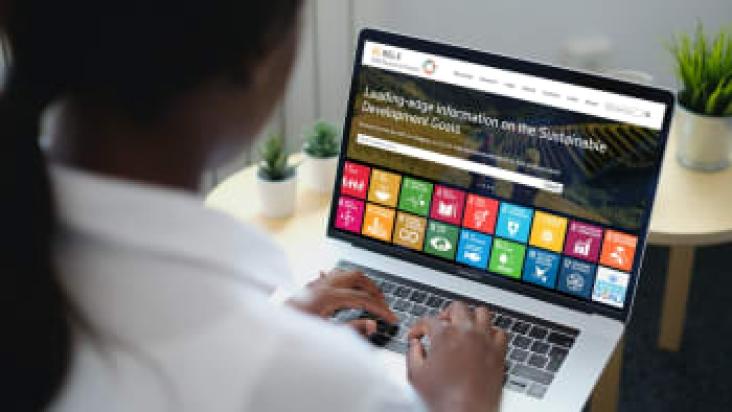
Person typing on laptop with SDG Resource Centre displayed

In this round up of 2024, we share the Special Collections published on the SDG Resource Centre throughout the year, featuring more than 800 research articles and book chapters made freely available to advance knowledge and accelerate the achievement of the United Nations Sustainable Development Goals by 2030.

Pages