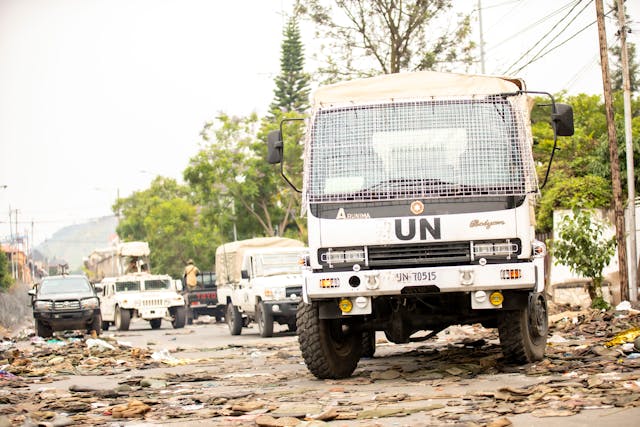
International Day of UN Peacekeepers 2026
The International Day of United Nations Peacekeepers is observed annually on May 29. Established by the United Nations General Assembly in 2002, the day honors the dedication, service, and sacrifice of the military, police, and civilian personnel who serve in United Nations peacekeeping operations. It also remembers those who have lost their lives in the pursuit of peace and highlights the continuing need for collective action in addressing global peace and security.
City and Environment Interactions, 2025, 100214
This study employs high-resolution UAV thermal imagery and machine learning to analyze microscale urban heat patterns in a vulnerable residential neighborhood in Daejeon, South Korea, identifying key factors such as alley width and proximity to rivers that influence thermal vulnerability. By informing targeted heat mitigation strategies in urban regeneration areas, the research supports SDG 11 (Sustainable Cities and Communities) and SDG 13 (Climate Action), advancing the World Population Day goal to �Leave No One Behind� by addressing localized climate risks in densely populated, marginalized urban settings.
City and Environment Interactions, 2025, 100209
This study uses a participatory Design Thinking approach in Cork City, Ireland, to identify stakeholder priorities for effective air quality communication strategies that empower communities and support behavioral change. By integrating inclusive communication with systemic policy and infrastructure improvements, the research advances SDG 3 (Good Health and Well-being), SDG 11 (Sustainable Cities and Communities), and SDG 13 (Climate Action), aligning with World Population Day's call to "Leave No One Behind" by addressing environmental health inequities in urban populations.
Advances in Nutrition , 2025, 100439
This scoping review examines diet-related health inequalities in high-income countries through the lens of the PROGRESS-Plus framework. It highlights the need for standardized methodologies and intersectional approaches to monitor and address persistent diet-related health inequalities in high-income countries
City and Environment Interactions
Volume 27, August 2025, 100201
This study leverages crowdsourced urban climate data to provide more inclusive and granular insights into urban heat dynamics, addressing gaps in traditional monitoring that often overlook marginalized communities. By harnessing freely available citizen science observations, the method supports the World Population Day theme of "To Leave No One Behind, Count Everyone," enabling more equitable and comprehensive data to inform sustainable urban development and climate resilience.
Retrieving data. Wait a few seconds and try to cut or copy again.
Despite global progress, maternal mortality remains high, especially in sub-Saharan Africa, highlighting the urgent need for strong leadership, increased investment in well-trained midwives, and equitable, culturally sensitive maternity care to achieve the Sustainable Development Goal of reducing maternal deaths to less than 70 per 100,000 live births by 2030.