Global

Growing media (substrate) is a fundamental part of a green roof, providing water, nutrients and support to plants. However, little research has reviewed how it affects plant performances in different climatic regions. This study aims to analyse published research on green roof growing medium across world's climate zones. Findings are structured according to Köppen–Geiger climate classification, aiming to investigate the prevalence of research conducted in different climate zones. Results from full-scale studies and laboratory or greenhouse experiments were reviewed.

This article aims to contribute to current discussions about “making cities inclusive, safe, resilient, and sustainable” (SDG 11) by linking debates that are currently taking place in separate containers: debates on the “global land rush” and the “new urban agenda”. It highlights some important processes that are overlooked in these debates and advances a new, socially inclusive urbanization agenda that addresses emerging urban land grabs.

Developing-developed world partnerships potentially present win-win opportunities for addressing climate-active gas emissions at lower cost whilst propelling developing nations on a lower-carbon trajectory, as carbon emissions, capture and storage are geographically independent. Expanded PES (payment for ecosystem service) principles provides a framework for assessing the transparency and efficacy of partnerships, tested on the model developed by The Converging World (TCW).

Elsevier,

Renewable and Sustainable Energy Reviews, Volume 70, 1 April 2017

This literature review identifies the impacts of different renewable energy pathways on ecosystems and biodiversity, and the implications of these impacts for transitioning to a Green Economy. While the higher penetration of renewable energy is currently the backbone of Green Economy efforts, an emerging body of literature demonstrates that the renewable energy sector can affect ecosystems and biodiversity.
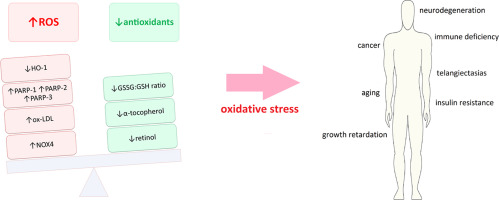
Rare pleiotropic genetic disorders, Ataxia-telangiectasia (A-T), Bloom syndrome (BS) and Nijmegen breakage syndrome (NBS) are characterised by immunodeficiency, extreme radiosensitivity, higher cancer susceptibility, premature aging, neurodegeneration and insulin resistance. Some of these functional abnormalities can be explained by aberrant DNA damage response and chromosomal instability. It has been suggested that one possible common denominator of these conditions could be chronic oxidative stress caused by endogenous ROS overproduction and impairment of mitochondrial homeostasis.
Elsevier,

Handbook of Economic Field Experiments, Volume 1, 2017, Pages 309-393

This chapter addresses SDG10 and SDG8 by conducting a comprehensive review of the prevalence of economic discrimination, the consequences of such discrimination, and possible approaches to undermine it.
In March 2017, the inaugural Corporate Human Rights Benchmark (CHRB) was launched, a result of collaboration between leading institutional investors, human rights specialists and NGOs to produce an assessment framework for private sector performance on human rights. The Benchmark analysed 98 of the Global 500 largest publicly listed companies on their human rights performance. This article provides insight into the results of the first analysis and explain why the CHRB matters.
Looking for the best in innovation
ICIS launches the search for the very best in innovation in the chemical industry. Now in their 14th year, the ICIS Innovation Awards seek to recognize and reward companies and individuals that show high levels of innovation in products and processes, as well as providing benefits to the environment and advancing progress towards sustainability. This award raises awareness of the benefits of innovation to the environment and supports SDG 9 Industry, Innovation and Infrastructure.
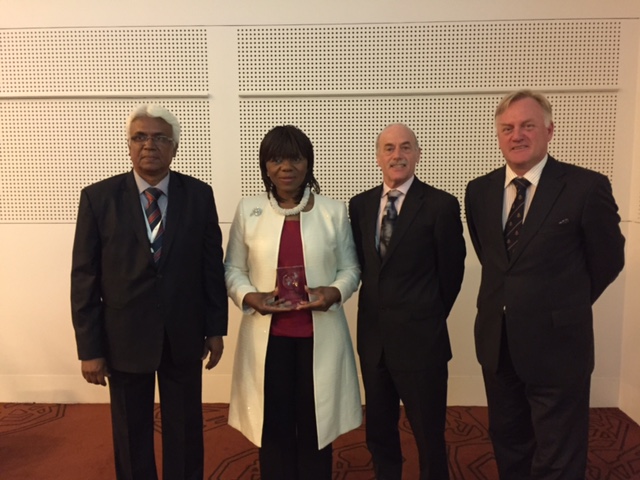
CLA President R Santhanakrishnan, winner of the award Thuli Madonsela, Nigel Roberts (LexisNexis) and past President Alex Ward
The 20th Commonwealth Law Conference took place in Melbourne in March 2017 with LexisNexis as the lead sponsor, and hosted by Commonwealth Lawyers Association (CLA) in association with the Law Institute of Victoria. The CLC brings together delegates from over 50 countries to meet and learn, as well as to recognise lawyers who champion the rule of law. Such exchanges between lawyers support SDG 16. 3 to promote the rule of law at the national and international levels.
This book chapter advances SDGs 15 and 2 by discussing basic soil physical, chemical, and biological properties and explores the interrelationships between different soil properties and functions as essential building blocks for a healthy functioning soil system.

Pages