Articles

Elsevier,

The Lancet Regional Health - Americas, Available online 29 October 2025, 101276, In Press, Corrected Proof

The article provides a comprehensive analysis of the escalating health impacts of climate change across Latin America, as well as the region's progress and challenges in adaptation, mitigation, and engagement.

LexisNexis Risk Solutions

Learn about the history of the ADAM Program and get a behind the scenes look at the new Interactive Missing Children Dashboard. This article demonstrates the power of the ADAM Program in locating missing children, relating to SDG 16, Peace, Justice and Strong Institutions. The ADAM Program is the result of a 25 year partnership between LexisNexis Risk Solutions and the National Center for Missing & Exploited Children (NCMEC).

Elsevier,

Water Research X, 2025

The goal of this special issue is to highlight the latest and most significant outcomes in energy and carbon-neutral urban water management for net-zero emissions.

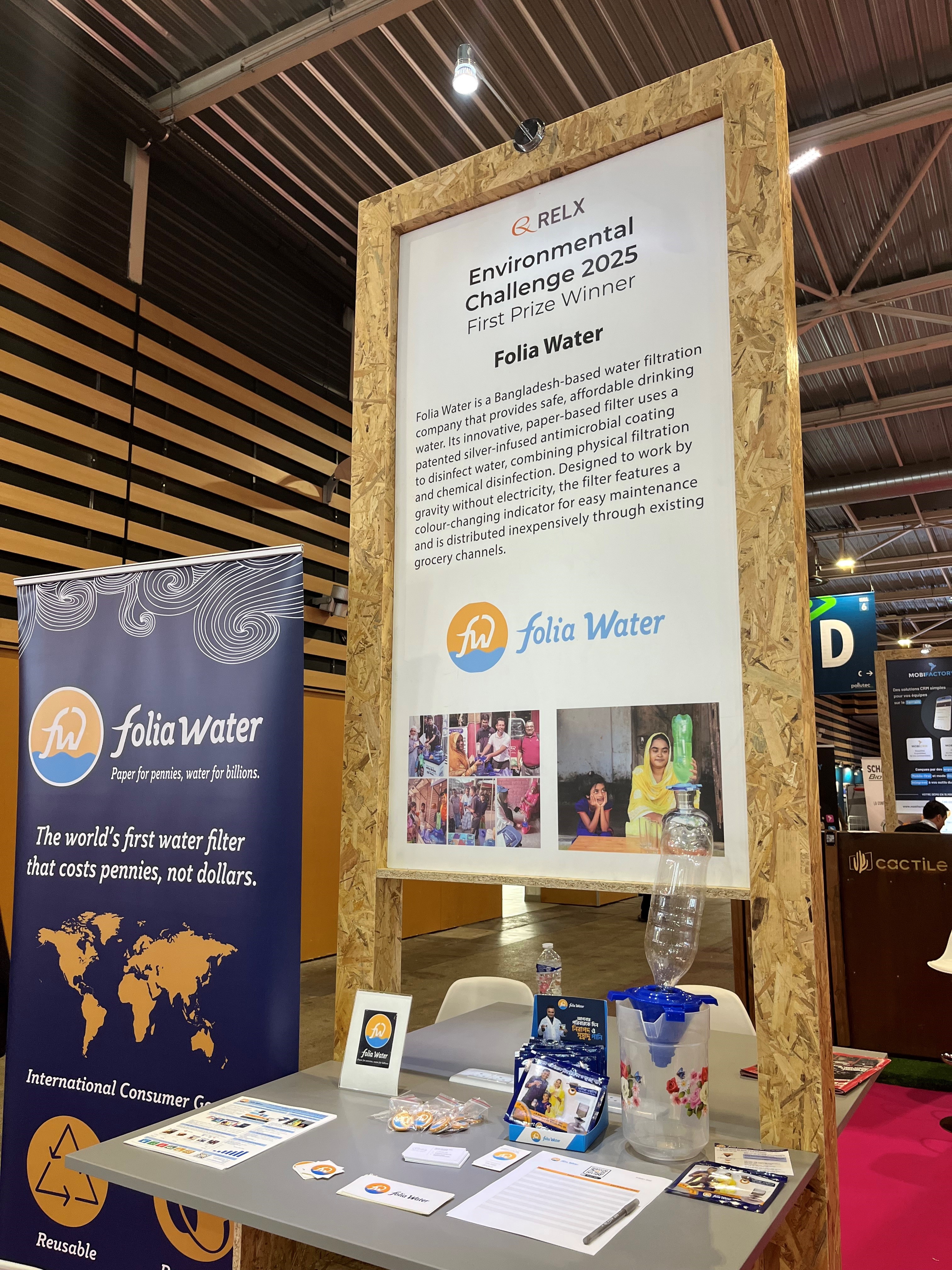
Image of Folia Water stand at Pollutec featuring a banner and water filter equipment
RELX

The 2025 winners of the RELX Environmental Challenge, which supports innovative solutions to advance SDG 6 Clean water and sanitation, have been announced.

Elsevier,

Chemical Engineering Journal, Volume 522, 15 October 2025

Report on a new smart delivery system designed to target and treat Alzheimer's disease more effectively, aiming to overcome the challenges of current treatments and offering a promising way to fight Alzheimer's more accurately and safely.
Elsevier,

Neuroscience, Volume 585, 15 October 2025

This study presents AlzFormer, a novel deep learning framework utilizing spatiotemporal self-attention to classify Alzheimer’s disease (AD), mild cognitive impairment (MCI), and cognitively normal (CN) individuals from structural MRI scans. By modeling MRI volumes as sequential slice-based inputs and fine-tuning a pre-trained TimeSformer model, AlzFormer achieved 94% accuracy and high class-wise F1-scores, while attention map analyses highlighted clinically relevant brain regions, demonstrating both robust performance and interpretability in multiclass AD diagnosis.
Elsevier,

Journal of Environmental Chemical Engineering, Volume 13, October 2025

This article provides a comprehensive review of the use of graphene-based biosensing platforms for the early detection of Alzheimer's disease. It is found that graphene-based biosensors can detect Alzheimer's disease biomarkers at femtomolar concentrations, enabling early diagnosis before symptom onset. These sensors can also identify multiple biomarkers simultaneously in accessible biofluids like blood, saliva, and urine, enabling less invasive testing.
Elsevier,

The Lancet Regional Health - Southeast Asia, Volume 41, October 2025

This viewpoint offers insights on policy to improve diet quality, that resonate not only in Bangladesh but also across other countries navigating similar transitions.
Elsevier,

Matter, Volume 8, 1 October 2025

With an estimated 2 billion people worldwide suffering from iron deficiency — a condition linked to anemia, impaired childhood brain development, and higher infant mortality — researchers are racing to find more effective nutritional interventions. MIT scientists have developed a promising solution: tiny crystalline particles known as metal-organic frameworks (MOFs) that can be used to fortify everyday foods and beverages, mixed into foods such as bread or sprinkled directly into drinks like coffee or tea.

Pages