This article, relating to SDGs 7 and 13, details Europe's race to maintain its position as a leader in renewable energy as global green wars intensify. Although Europe is investing heavily in new green technologies, they face significant challenges including increasing competition from countries like China and the US, as well as political and economic challenges.
This study contributes to Goal 15 - Life on Land because it shows that tree growth to temperature change is a combination of short-term plastic and long-term adaptive reactions, and it suggests a limited adaptation to climate warming of trees growing at high altitudes. Such studies remind us that Life on Land as we know it currently will only be possible through conservation of natural ecosystems.
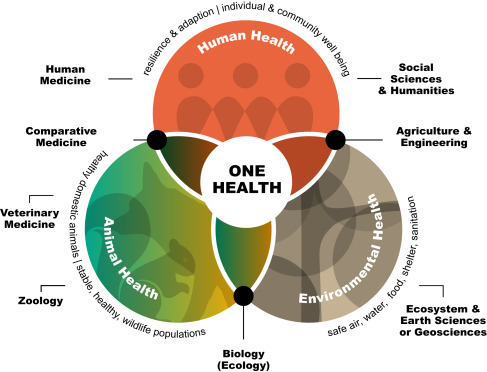
One Health and the Exposome embrace a broad view of human health and its environmental drivers as well as provide various tools and modes of operation to systematically uncover pathways linking poor health outcomes with their root causes to inform interventions supporting the WHO SDG3.
Elsevier,
Principles of Gender-Specific Medicine (Fourth Edition)
Sex and Gender-Specific Biology in the Postgenomic Era
2023, Pages 409-429
This content aligns with Goal 3: Good Health and Wellbeing as well as Goal 10: Reduced Inequalities by emphasizing the importance of gender-specific medicine in pharmaceutical development and global healthcare, aiming to improve health outcomes for all genders. By addressing the challenges faced by the pharmaceutical industry in integrating knowledge on sex-specific biological differences into drug development programs, the chapter advocates for strategies to promote equity in healthcare access and outcomes. Additionally, it recognizes the importance of addressing gender disparities in healthcare and advocating for approaches that ensure equal access to gender-specific pharmaceuticals. Through these efforts, the content supports the goal of reducing inequalities in healthcare access and outcomes, ultimately contributing to the promotion of good health and well-being for all individuals, regardless of gender.

Habitat conversion and resource utilization have been identified in the One Health approach as drivers of poor ecosystem health that can lead to disease spillover events supporting SDG3.
This study produces a large dataset of pesticide concentrations in Italian women.
The study shows that resource variables are relevant for understanding the situation of cancer patients. Clinicians who notice low levels of sense of coherence, resilience, or optimisms in their patients will be better prepared for identifying patients in need for interventions. Especially younger patients deserve special attention.
Instresting paper on Mediterranean river microplastic pollution
This article supports SDGs 7 and 13 by achieving the efficient CO2 capture via connecting a packed bubble column (S-PBC) contactor in series, combined with machine learning and multi-objective optimization based on Enhanced Weathering (EW) technology.
Background: The current investigation aimed to assess the mental health burden on healthcare workers during the early stages of the COVID-19 pandemic. Methods: A link to an online survey was sent to an estimate of 18,100 employees of Sheffield Teaching Hospitals NHS Foundation Trust (STH) who had access to email. The survey was completed between 2nd and June 12, 2020.1390 healthcare workers (medical, nursing, administrative and other professions) participated in the first survey. Data from a general population sample (n = 2025) was used for comparison.