Articles

Elsevier,

Learning, Culture and Social Interaction, Volume 53, August 2025

This study explores the development and refinement of a technology-enhanced embodied learning environment at Camp Expression, a reverse-inclusion camp for children with moderate-to-severe communication disabilities.
Elsevier,

Asian Journal of Psychiatry, Volume 111, September 2025, 104632

This study demonstrates that deep learning models, especially Graph Convolutional Networks can effectively and accurately differentiate healthy individuals from those with mild cognitive impairment and Alzheimer's disease, supporting early diagnosis of cognitive decline.

Elsevier,

The American Journal of Clinical Nutrition, Volume 122, Issue 2, August 2025, Pages 582-592

The article underscores the vital role of traditional country foods in supporting the health of Nunavik Inuit, as these foods are primary sources of important antioxidants like ergothioneine and selenoneine. The markedly higher levels of these compounds among Nunavimmiut�especially among women, elders, and frequent country food consumers�demonstrate the nutritional and cultural significance of maintaining access to wild foods. The findings advocate for the protection and promotion of traditional food systems to preserve both health benefits and Indigenous food sovereignty, while also calling for further research into the health impacts of these unique dietary antioxidants in Indigenous and non-Indigenous populations alike.
Elsevier,

IJID One Health, Volume 8, September 2025, 100078

The article highlights the importance of tailoring interventions to local cultural contexts and engaging with indigenous communities to ensure the feasibility and sustainability of Echinococcus control efforts.

Elsevier, iScience, Volume 28, 18 July 2025
Pesticide residues in freshwater threaten water sustainability, but the global discrepancies in freshwater pesticide contamination remain uncertain. This study collected pesticide concentration data from various countries around the world and adopted a flexible scoring approach to assess contamination within surface freshwater and groundwater. Results revealed significant disparities in contamination among countries. Africa was identified as a priority for freshwater pesticide control as most countries there showed relatively high scores in both surface freshwater and groundwater.
Elsevier, iScience, Volume 28, 18 July 2025
Global water savings can be achieved by trading crops from countries with higher to lower water productivity. However, strengthening such water-saving trade links could intensify global water stress if exports come from water-stressed countries to less stressed ones. Here, we explore whether international crop trade can alleviate global water stress using a virtual scarce water saving/loss indicator and refined trade matrices for 109 crops across 150 countries.
Elsevier, Journal of Allergy and Clinical Immunology: In Practice, Volume 13, July 2025
This study provided a granular assessment of severe asthma–related greenhouse gas emissions in the United Kingdom, by CO2 source and transition through different care pathways, highlighting the environmental cost of uncontrolled disease and decreased carbon footprint on referral to specialist care. The results suggest that regular specialist care not only improves patient outcomes but also reduces greenhouse gas emissions in line with aims to reduce the health sector’s contribution to the total national carbon footprint.
Elsevier, iScience, Volume 28, 18 July 2025
This review examines how artificial intelligence (AI), machine learning (ML) and the Internet of Things (IOT) improve thermal efficiency, enable real-time system monitoring, and support predictive maintenance across solar, wind, geothermal, and bioenergy applications.
Women smiling in a white headscarf
Elsevier

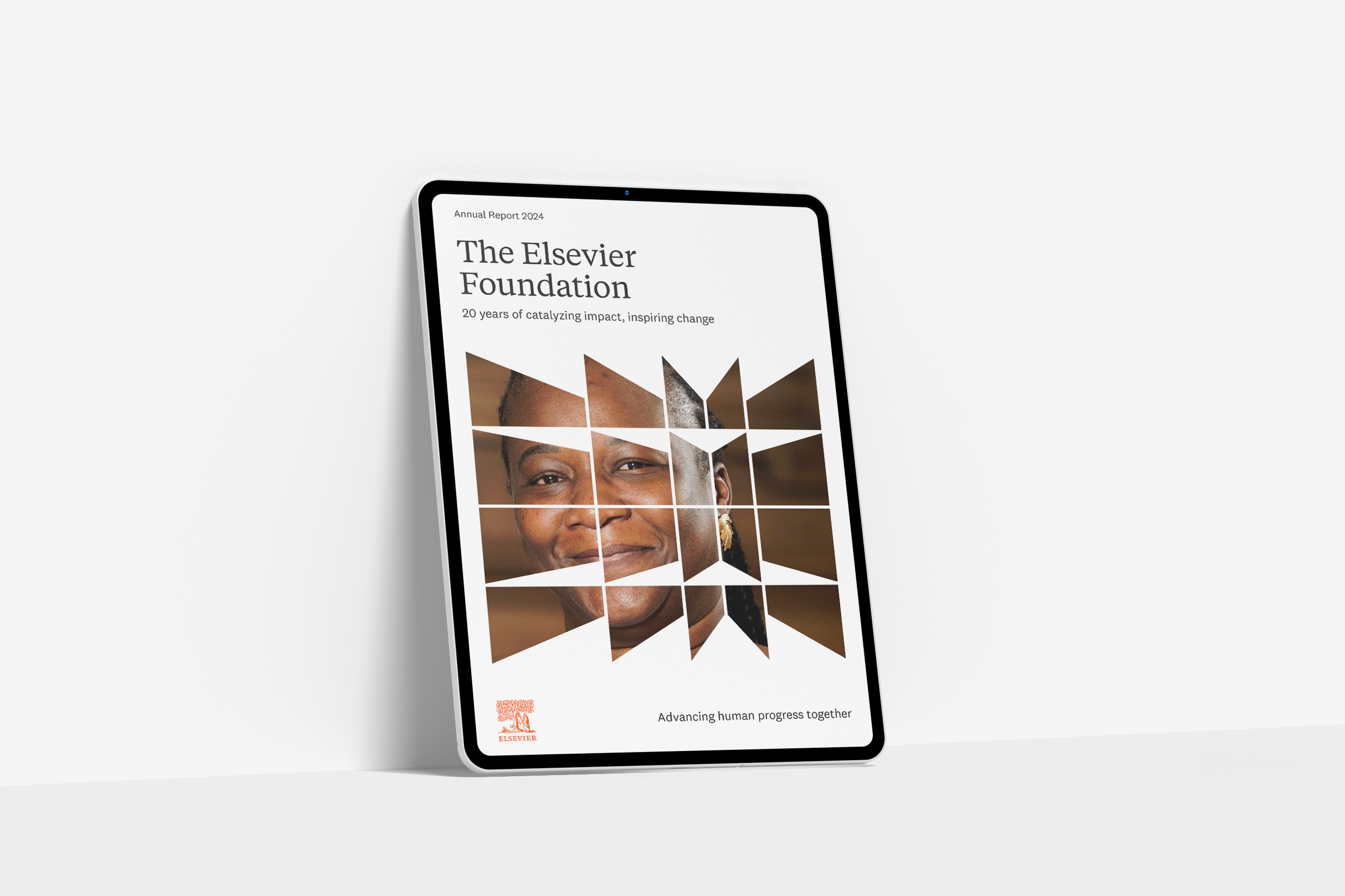
To mark its 20th anniversary, the Elsevier Foundation has released an impact report highlighting its key partnerships and achievements. Since 2005, The Elsevier Foundation has awarded over $18 million in grant funding. These grants have supported more than 100 partners across 70+ countries, reinforcing a commitment to fostering inclusive research and healthcare and promoting better health outcomes and a more sustainable research ecosystem.

Pages