Elsevier,
The Lancet Global Health, Volume 10, January 2022
This Comment supports SDGs 3 and 10 by explaining how people with disabilities are more likely to suffer adverse health effects from climate change, for a variety of reasons, and emphasising that people with disabilities should be considered, and included in planning of, climate change mitigation and adaptation efforts.
Elsevier,
Advances in Legumes for Sustainable Intensification, Volume , 1 January 2022
Modern agricultural systems are heavily energy-dependent at all stages of operation. It is assessed that global food production is responsible for 30% of the total energy usage. Though there are various energy sources available, at present, global food production mainly depends on fossil fuels for the needed energy fulfillment. Being fossil fuel, a limited nonrenewable energy source and considering its negative impacts on the environment thrive the necessity for reliable renewable energy sources. Wind power, solar power, micro-hydro-power, and biomass energy are some of the well-established renewable energy sources that could substitute fossil fuel usage in agriculture. However, these renewable energy sources also have constraints that reduce their full adaptability. For instance, higher demand for biomass energy could cause complications in land use patterns in agriculture and also lead to deforestation. Therefore, increasing the energy use efficiency (EUE) of the whole agricultural production process sustainably is essential. Legume crop cultivation and integration of legumes for the other cropping systems through crop rotations, cover crop cultivations, or intercropping can be recommended for the reduction of input energy usage without compensating the yield. In this regard, key abilities of legumes as biological nitrogen fixation, improvement of soil organic matter and soil moisture contents, reduction of soil moisture evaporation, improvement of agro-biodiversity are contributing to higher energy use efficiencies of legume incorporated farming systems. For instance, ≈ 4890 MJ ha-1 of energy for N application could be conserved with the integration of soybean for corn cultivation. Furthermore, soybean used 50% lesser energy for machinery than in wheat cultivation, and save approximately 1720 MJ ha-1 of energy in land preparation through incorporating the legumes with cereals, which indicates its potential in energy saving. Therefore, popularizing the intercropping systems of legume–cereal, legume-root crop, the introduction of legume crops for the marginal lands where it needs more energy to cultivate other nonlegume crops, practicing rotational crop cultivation included with a legume crop will be more effective in terms of energy-saving. Energy-saving efficiency of legume can be further improved with effective use of microbial inoculum, efficient management of soil moisture content, applying conservation agricultural practices for economical legume cultivation, selection of suitable legume variety for the particular agro-ecological region, and application of precision agriculture for needed crop management. However, revisiting available agricultural policies and formulating practical implementation mechanisms are needed locally, regionally, and globally to publicize legume-based farming for higher EUE in the future.
Elsevier, Transportation Research Procedia, Volume 60, 2022
The COVID-19 pandemic has devastated communities throughout the world. However, the negative impacts of another pandemic, affecting cities worldwide, arguably rival those of COVID. This destructive global health problem, which we have largely ignored, has been described as the “hurry virus” – the culture of speed that dominates modern lives and cities, causing us to constantly strive to ‘go faster’. This hurry virus has comprehensively infected our city transport systems from the early 20th century.
Elsevier, Journal of Adolescent Health, Volume , 2022
Purpose: The contribution of air pollution to subclinical atherosclerosis in a young population remains limited. This study aimed to assess whether long-term exposure to urban air pollutants increases carotid intima-media thickness (CIMT) in adolescents and young adults. Methods: This study included 789 subjects between the ages of 12 and 30 years who lived in the Taipei metropolis from a cohort of young Taiwanese individuals.
Elsevier, The Lancet Planetary Health, Volume 6, January 2022
Background: Combustion-related nitrogen dioxide (NO2) air pollution is associated with paediatric asthma incidence. We aimed to estimate global surface NO2 concentrations consistent with the Global Burden of Disease study for 1990–2019 at a 1 km resolution, and the concentrations and attributable paediatric asthma incidence trends in 13 189 cities from 2000 to 2019.
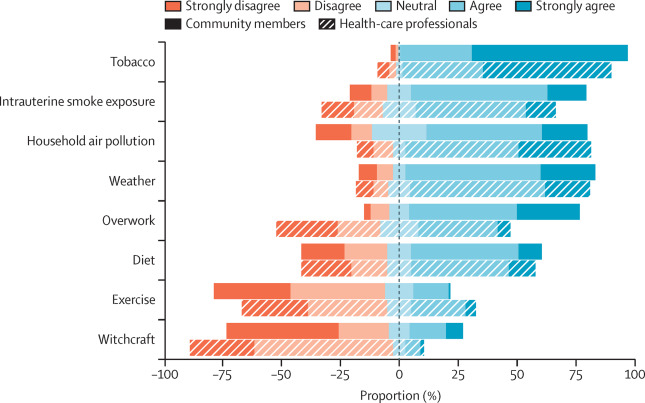
Background: Effectiveness of health programmes can be undermined when the implementation misaligns with local beliefs and behaviours. To design context-driven implementation strategies, we explored beliefs and behaviours regarding chronic respiratory disease (CRD) in diverse low-resource settings. Methods: This observational mixed-method study was conducted in Africa (Uganda), Asia (Kyrgyzstan and Vietnam) and Europe (rural Greece and a Roma camp). We systematically mapped beliefs and behaviours using the SETTING-tool.
Elsevier, The Lancet Regional Health - Western Pacific, Volume 18, January 2022
Background: Hepatitis C elimination may be possible with broad uptake of direct-acting antiviral treatments (DAAs). In 2016 the Australian government committed A$1.2 billion for five years of unlimited DAAs (March 2016 to February 2021) in a risk-sharing agreement with pharmaceutical companies. We assess the impact, cost-effectiveness and net economic benefits likely to be realised from this investment.
Elsevier,
Managing Treatment-Resistant Depression: Road to Novel Therapeutics, Volume , 1 January 2022
This content aligns with Goal 3: Good Health and Wellbeing as well as Goal 10: Reducing Inequalities by exploring novel and advanced personalized medicine approaches to tailor depression treatments.
Elsevier,
Neurobiology of Brain Disorders: Biological Basis of Neurological and Psychiatric Disorders, Second Edition, Volume , 1 January 2022
This content aligns with Goal 3: Good Health and Wellbeing and Goal 10: Reduced Inequalities by providing a framework for understanding neurodevelopment, explore the detection and diagnosis of developmental disabilities, describe techniques for investigation of the mechanisms of these disorders, and present principles of management.